The Little Shop of ElleSee: child care

Showing posts with label child care. Show all posts

Inspired By Reggio Emilia: Part 2

April 10, 2022

Since we have begun implementing the strategies and philosophies of Reggio Emilia in the classroom, my partner and I have started to undo some of the biases we were taught about how children learn, and how we as educators can cultivate a love of curiosity that will hopefully continue to grow. The following (which I have broken into two parts because it was getting to be too much text to go through) are some of the basics that I have taken away from my reading. Of course there is always more to learn!


View children as collaborators, not just telling them what to do and learn: This idea of children being their own teachers has been a game-changer for us. Instead of just telling the kids information, or deciding what we are going to learn based off of an old curriculum, we have started having the children answer their own questions and consider what they think the answer may be if they are unsure.


I have come to understand that preschoolers already have a lot of information about the world, but because they are often provided the answer by the adults in their lives they continue to look to us almost as if to confirm something that they already know: when my partner leaves for the day, someone might ask where she went and I respond with "Where do you think she went?" (don't read that with sarcasm) and they will come up with the response of "She went home for the day" or "She went to the bathroom". We confirm their answers, but encourage them to come up with their own ideas.


In most instances, the children are come up with some great responses to the questions that we ask them, or that they ask themselves and we prompt them to think about what the answer might be. We often do some probing if we are looking for a specific response beyond what they have already come up with, and we will provide our thoughts and ideas as well, but we want them to think about it first. 


I'm really enjoying this aspect of the approach because it is making the children more thoughtful in their responses, more inquisitive with their questions, but also comfortable with helping each other and working together to come up with ideas. We have explored some interesting topics, and they have shared some incredibly powerful thoughts that I never would have expected from people their age.


Documentation and collaboration work together to form the curriculum: Observing children as they play, and creating unbiased documentation makes the collaborative process that much easier. Through documentation you are able to understand what is important to the children at the moment, and what themes, ideas, and questions keep popping up.


At one point, my partner and I started to notice a lot of play surrounding death, so we asked the children what they knew about death. The responses that they came up with were incredibly beautiful and thoughtful. Children are aware of more than we think, and they are watching and understanding more than we realise. 


After our initial discussion about death, my partner and I were then able to source books from the local library to make it a part of our Circle Time, or morning meeting, with the children. Since then, we haven't noticed as much play around death, and when it does come up we can use some of the talking points we discussed during Circle Time.


Documentation can also be used as a way to communicate with families about what is taking place in the classroom. Sharing your findings can show parents and caregivers what the children are interested in, how they explore and use the space, and what they have been learning from their explorations.


This approach is less about sitting down and learning the alphabet, and more about expanding a child's curiosity and understanding of the letters and numbers that we see in everyday life. The way you set up the experiences and environment offers lots of opportunities for early literacy and math without sitting down and doing worksheets.


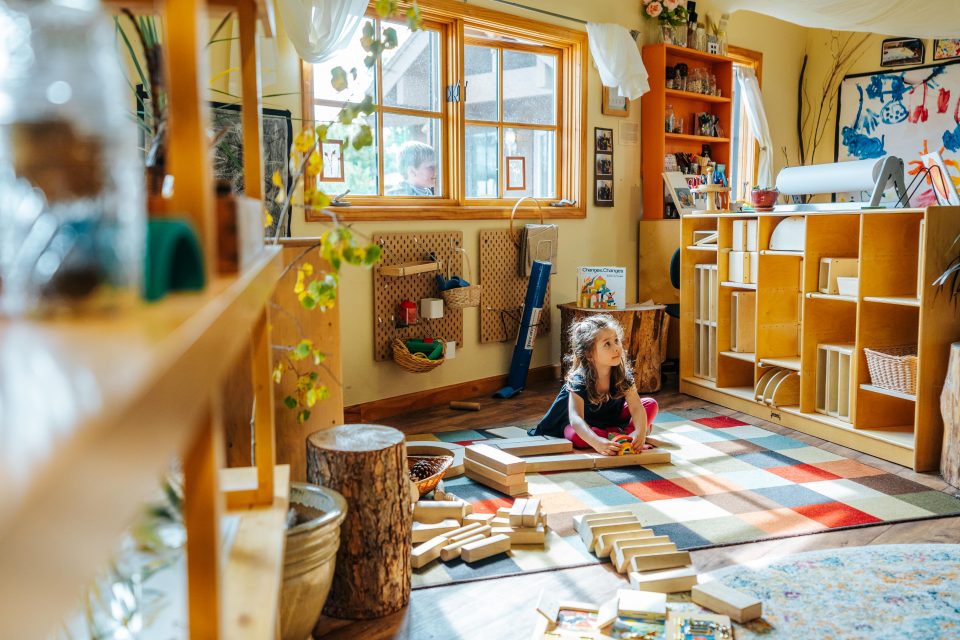
The environment should be ever evolving: One thing that really stood out to me while reading about the Reggio Emilia Approach this time is that you should be open to changing what is in the environment and how it is organized and arranged based on the group of children that you currently have. 


This is something that I have always unconsciously done after noticing that a space is not being used at all, or the way an area is being used has changed drastically, but now I am much more aware of it and how the power of observation can support learning. 


Documentation and collaboration can help a lot in this area as well. Once you know what the children are interested in and curious about, you can adapt the environment to reflect the areas of interest, adding items or taking away items, or even switching areas and making something completely new.


Inspired by Reggio Emilia: Part 1

Inspired by Reggio Emilia: Part 3

0

Inspired by Reggio Emilia: Part I

February 20, 2022


I heard the words "Reggio Emilia" for the first time many years ago from my first room partner. I knew that she wanted to "implement Reggio Emilia", but I had no clue what that meant as I had just started learning what it even meant to be an early childhood educator. 


She gave me a textbook to read through called Working in the Reggio Way: A Beginner's Guide for American Teachers by Julianne P. Wurm, but I didn't end up looking at it until several years later when I found it shoved on a shelf along with the textbook Authentic Childhood: Exploring Reggio Emilia in the Classroom by Susan Fraser and Carol Gestwicki.


I had already completed my schooling when I sat down to read through each textbook, but I still did not know what the words "Reggio Emilia" meant, and had only heard whispers from the folklore that follows them around in North America. 


I quickly learned that Reggio Emilia is, in fact, a city in Italy, and there is so much more to adopting the philosophies behind the program that has developed over nearly 80 years than simply switching out plastic toys for natural materials, making lovely presentations to encourage children to play, and taking photographs of what they are doing.


While there were aspects of it that intrigued me, like setting up the environment to be engaging enough to act as the third teacher, I still didn't quite understand everything that was involved; there were always little pieces that I understood, but I could never quite get them to fit together to make sense of the puzzle. 


As I've been going through everything again, I have started to realise that the work I have done on my journey to understand anti-racism and anti-hate has helped me to understand that putting myself aside (my beliefs about children, my own traumas, etc.) is a necessary piece of the puzzle.


Through this work that I have done -- and, believe me, am still learning -- it is easier for me to understand that seeing children as capable means so much more than helping them learn how to do up their own zipper, or clean up their spot at the table; it means that I see myself as a collaborator with them, not just the person that is telling them what to do; it means asking questions in a way that gets them to think a little bit deeper and come up with ideas and solutions themselves. 


It's been a slow process, and has taken a lot of learning and reflection, but, with the help of my room partner, we are starting to understand how we can put the philosophies of the Reggio Emilia approach into place in our classroom.


Inspired by Reggio Emilia: Part 2

Inspired by Reggio Emilia: Part 3

0

The Importance of Rough & Tumble Play in Early Childhood

March 15, 2021


One of the most difficult things for me to learn and come to terms with as an Early Childhood Educator was the concept of rough play, but one group of children that I worked with really enjoyed wrestling with each other, so, after attending a workshop about Embracing Risky Play in Childhood, instead of punishing the children for the behaviour, we decided to get on board with their rough and tumble play.


The first thing we did was sit the children down and talk about how we were going to allow them to wrestle outside: 


- We discussed where would be an appropriate place to wrestle, and they decided on the grass area


- We discussed how many people should wrestle together, and they decided that two was enough


- We also discussed what was not considered wrestling, and they thought choking and hitting the face was inappropriate


- We also talked about paying attention to each other's faces so we could know when we were not having fun anymore, and how if our bodies felt hot and angry then it was time to stop, or if our partner's face was no longer smiling then it was also an indication to stop. 


The children should be leaving their wrestling still as friends.


With these rules, that the children helped decide on, in place, we began letting them wrestle outside in our grassy area. We would remind them of the rules every time we went outside, and an educator was always nearby when the wrestling began, noting when there were too many wrestling together, or if the wrestling was getting too aggressive, or mean spirited, and their bodies were saying it was time to be done. As always, they caught on quickly, and, by the end of that summer, they were getting really good at remembering the rules and recognizing when it was time to be done.


It wasn't easy. While my partner and I were fully giving ourselves to the idea, we had to let other educators in the centre know what was going on so that they would understand that the wrestling and rough and tumble play was allowed, and being watched closely. It takes a lot to push yourself through the discomfort of leaving a specific way of teaching behind, but it really changed how we approached the situation, and made it less of a source of frustration for us educators, and the children.


Why is rough and tumble play an important part of early childhood development? Based on some of the rules that we devised with the children, you can see that it helps them understand their emotions and how to regulate their bodies, as well as understand when they are getting angry and need a break. It also helps them to recognise and understand emotions in other people: I can see my friend is no longer having fun so it is time to stop. It also helps them develop resilience, and gives them the opportunity to use their larger muscles and get more energy out of their bodies.


*It is important to note that rough and tumble play is not just for boy, there are plenty of little girls that enjoy wrestling and playing other rough and tumble games!


0

The Importance of Letting Children Complete Tasks on Their Own

February 19, 2021

Think about all of the things that you can do without thinking about them. Chances are that you've got a pretty long list of things you are capable of doing without even really thinking about what you need to do to complete those tasks. They can be anything from zipping your zipper (and what to do when it gets caught), to how to scrape the food you didn't eat off your plate and put it in the sink or dishwasher.


Now think about all of the steps that you have to take in order to complete a single task on your list. Let's take a look at putting on a sock: you know that your sock has to be turned a certain way so that the heel ends up in the same spot as the heel on your foot; you know that you have to open up the sock and put your foot in the hole at the top, pushing your foot in while pulling at the top of the sock at the same time. What happens if the sock gets twisted, or your toes end up getting stuck? You know that you have to adjust the sock, and maybe even take it off.


There are actually quite a few steps involved in being able to put on your sock, but you do it without even thinking about it. You are not born knowing skills that seem like simple tasks, they require time and attention, and, within a week or two of trying, children even as young as two (2) are pretty capable of completing these tasks, like putting on their shoes, pulling up pants, or scraping a plate of food, when given the opportunity to try, and it makes them feel so proud when they complete them.


Often, when it comes to learning, these types of tasks are overlooked. There are many reasons, be it that caregivers just do not have the time to wait for their child to attempt to put on their pants so they just do it for them, or learning the alphabet or how to write your name before entering school is seen as more important. What a lot of people do not realise is that these tasks are just as important for children to learn, if not more. The tasks we do every day that we do not think much about require fine motor skills, gross motor skills, and problem solving skills, just to name a few. Not to mention what it does for self esteem. How good do you feel when you complete a task that seems next to impossible when you first try? Pretty darn good!


A lot of schools have begun asking caregivers to make sure that their new students are capable of a lot of self-help skills before even starting Kindergarten. When a child enters school, it is imperative that they are capable of putting on their winter gear before heading outside for recess as teachers are not able to get all of the children ready within the small window of time that is recess. That doesn't mean that if they are struggling that help won't be offered, but the help that is offered is minimal and will eventually no longer be needed as the child is able to complete the task.


So what can we do to help our children learn to complete tasks on their own? 


If your child is beginning a new task that they have never done before, make sure you give them enough time to complete it. If they are working on zipping up their coat but they only get to do it when leaving the house, then you are more likely to take over when they are taking too long. Work on it at a time when you're not needing to leave the house, and provide toys and dress-up clothes that have zippers, buttons, snaps, etc. on them.


You can also make a game out of it. If the task your child is working on is learning how to clean up their room, set a timer to see how quickly they can do it, or sing a special song while helping them learn how to organize their toys.


There is nothing quite like completing a task and the feeling of pride and accomplishment that comes with it, even as adults. Children get so excited when they are able to zip their zipper by themselves, or put on their shoes, or pull up their pants. They are so capable of it, and just need our time and patience to walk them through the steps that we already know without thinking about it.


0

Child Development: Providing A Script

August 25, 2020


Earlier this year, I wrote a post talking about the importance of teachable moments: what they are, and why they become increasingly necessary as your child gets older. In the post, I mentioned the idea of giving your child the words that they need to help them through a difficult situation, and I want to dig a little deeper into that.

Giving your child words does not mean that you are telling them what to think or feel, it means that you are providing them with a script (like in a play) that they need to help them express their emotions, and what they need. When a child does not have a certain skill, sometimes you need to teach them by breaking down the steps and providing them with opportunities to learn to do the skill on their own. This is called scaffolding, and it is a really useful way to help young children to be able to develop all kinds of skills (physical, social emotional, etc.). 

All children are capable of learning skills that we may believe are too difficult for them (even toddlers can learn to put on their shoes), sometimes they just need the steps to be broken down for them. It may take a while, or they may catch on quickly...it all depends on the skill, how it is being approached, and what your child does with the information.

Imagine your child has just been hit by another child at the park, and your child hits the other child back. You might tell your child to "use your words", but that phrase means nothing to a child that has not been taught what words to use. 

By getting close to your child (down to their level is even better), and giving them a script to use such as "Please don't hit me" or "Stop hitting me", you are giving them the words that they will need so that eventually you will be able to tell them "use your words" and they will know exactly what to say in response. Most likely, this will need to be done in every situation until your child has enough responses in their arsenal that they will be able to respond to any child in any situation. 

Think of how a building is put together. Is the top of the building put on first, or is the foundation laid, and then the other parts of the building are slowly added on top. Eventually, you won't even have to tell your child to "use your words" because they will know exactly what to do when a situation arises.


0

What is an Early Childhood Educator?

August 20, 2019


An Early Childhood Educator (ECE) works with children during their earliest years, usually between the ages of 0-6. An ECE can be found in several settings, including early learning centres, preschools, Kindergartens and into the first few grades of school, and has received either a university degree in education, or a college diploma (a 2-year program) with an emphasis on child guidance and planning/implementing age appropriate programming. 

The main goal of an Early Childhood Educator is to guide the development of children during their first few years of life and typically follows a holistic approach, meaning they help grow a child's intellectual, emotional, social, physical, creative and spiritual potentials.

As an ECE continues to work, there are many opportunities for growth and development. A quality educator will take part in educational experiences through conferences and courses, and read books to learn more about the changes in early childhood education and development, as well as any approaches they may be interested in working with (read more about the different approaches here). 

An Early Childhood Educator should always be wanting to develop a deeper understanding of what it means to work with children, and how to continue to enrich the child's environment and their development, as well as work with families to make sure they are all working towards the same goals. They understand what goals are developmentally appropriate for each child (as individuals, as an ECE knows that each child learns differently), and set proper limits and expectations to help a child achieve those goals.

ECEs are so much more than a glorified babysitter. Besides taking care of the basic needs of your child, they understand that child development involves knowledge about how to observe each individual child so that programs may be tailored specifically for a group of children, and not just provide blanketed themes like Winter and Fall. 

They also know how important it is to learn about what you value at home and in the community so that it can be applied at the early learning centre your child is attending. As well, they understand that knowledge about child development is crucial in providing quality care because it is how an ECE knows when your child needs their hearing tested for delays in speaking, or needs some extra support to help them reach the same level of development as their peers (while completely aware that your child may never reach that level, but being compassionate and doing everything they can to help anyway).

An Early Childhood Educator is a teacher that helps children question the world around them and come up with their own answers. They are a source of comfort away from home, a social/emotional guide, and so much more!


0

The Gift of Open-Ended Toys

May 05, 2014
Open-ended toys are toys that allow the imaginations of children to soar to their highest peaks. They give children the building blocks to create the world that they want to live in at that moment, and they can easily make anything from a restaurant to the Batmobile.

At the early learning centre that I work in we only provide access to open-ended toys -- closed-ended toys are typically battery operated or have only a few ways of possibly playing with them -- and their imaginations go wild. I love seeing the things that they build and the scenarios that they create. 

Even in my own home I have provided my son with many open-ended toys. That's not to say that he doesn't have any access to closed-ended toys. When he was a baby he had a lot of fun playing with a little battery-operated walker that played music and animal sounds, and he recently has fallen in-love with remote-controlled cars. He even gets to play games on my iPad, but the majority of the time we encourage him to do art, play with his musical instruments, build Hot Wheels tracks with his Dad, and play with his toy dinosaurs.


It's good to have a balance of open-ended and closed-ended toys. When we look back at our own childhood's they were filled with making shoebox houses, mud pies and Lego cities, and I want to provide a similar experience for my own child.

Good ideas of open-ended toys include:

1. Animals and dinosaurs made from any kind of material. They don't have to be wooden -- find the elephants and other animals here.
2. Blocks of any kind -- wooden, plastic, milk cartons, tree stumps and branches -- find wooden blocks of all shapes, colours and sizes here.
3. Toys that can be manipulated in any way -- Lego, Tinker Toys, etc -- find the connecting rings here.
4. Cars and other vehicles -- motorcycles, dump trucks, school buses, etc. -- find the car here.
5. Clothing and other toys that encourage imaginative play -- babies, dress-up clothes, jewellery, fox tails :)
6. Play food and other kitchen items -- find the felt vegetables here.
7. Child sized furniture and toys -- find all sorts of rocking horses here.


Other good open-ended toys include any musical instruments, art supplies, and sensory things such as water, dirt, sand, and play dough.


0

Halloween Activities: Pumpkin Faces

October 18, 2013
I have always struggled with trying to figure out some Halloween related games and activities for my preschool class -- this was before Pinterest really took off -- but last year I came up with the idea of making some different mouths, and shapes for eyes and noses that the children could stick to a pumpkin shape. As always, they didn't use the shapes as I imagined in my mind -- or like my adult brain put them together -- and they came up with some fantastic Jack-o'-Lantern faces that I could never have even dreamed up myself. That's one of the things that I like best about working with children.


I used mac-tac -- or a laminator -- to protect the pumpkins and the face pieces from wear-and-tear, and sticky-tack to make it easier for the kids to stick the pieces down and remove them too.


*Please forgive me! This was one of those moment when I needed to use my camera phone because I was working on this project at work. It also happened to be during quiet time so the lights were all out...please don't tell my boss :)


2
Powered by Blogger.